Industry Trends in Collaborative Robot Safety Standards for 2025
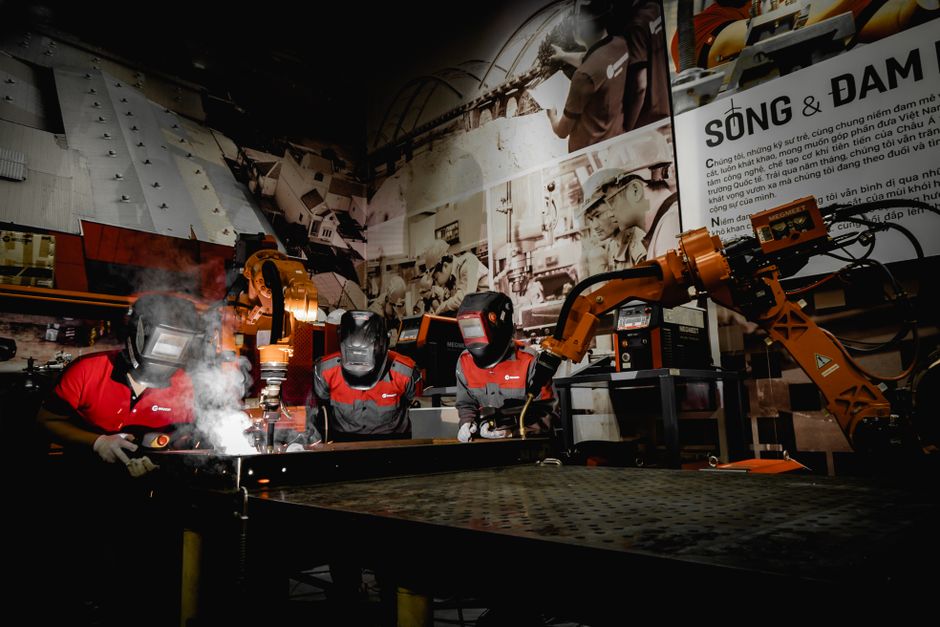
The evolution of collaborative robotics has brought renewed attention to safety standards that govern human-robot interaction. As industrial environments increasingly integrate collaborative robots, or cobots, the regulatory framework that ensures safe operation continues to be refined. The year 2025 marks a significant milestone with updates to key international and national standards, including ISO 10218 and ANSI R15.06, which set the foundation for safe design, installation, and use of cobots. These revisions reflect years of practical experience, technological advances, and a deeper understanding of risk in shared workspaces.
Manufacturers, system integrators, and end users must stay informed about these changes to align their practices with current expectations. The updates address several critical areas, such as force and power limitations, speed monitoring, and risk assessment methodologies. Rather than introducing entirely new safety principles, the 2025 standards clarify existing requirements and add more specific guidance for scenarios where humans and robots work in close proximity. This article provides an overview of the key trends shaping collaborative robot safety standards, focusing on the most notable modifications and their implications for those involved in the deployment of cobot systems.
Understanding these standards helps organizations design safer collaborative applications while maintaining productivity. However, it is important to note that compliance with standards alone does not guarantee absolute safety; rather, it provides a structured approach to identifying and mitigating hazards. The following sections explore the major updates in force limiting, speed monitoring, and risk assessment, as well as broader considerations for implementation in the context of evolving industrial practices.
Overview of the 2025 Revisions to ISO and ANSI Standards
The primary documents governing collaborative robot safety are ISO 10218-1 and ISO 10218-2, along with the technical specification ISO/TS 15066. In the United States, ANSI R15.06 aligns closely with ISO standards but includes additional regional considerations. The 2025 updates to these documents introduce several clarifications and new requirements that reflect practical experiences from the past decade of cobot deployment. One of the overarching trends is a shift toward more precise definitions of collaborative operation modes, such as safety-rated monitored stop, hand guiding, speed and separation monitoring, and power and force limiting.
Another notable change is the harmonization of terminology across different standards. For example, the 2025 revisions aim to reduce ambiguity in terms like “collaborative workspace” and “protective stop.” These clarifications help integrators design systems that meet both ISO and ANSI requirements without conflicting interpretations. Additionally, the standards now provide more detailed guidance on the validation of safety functions, including test methods for force and speed measurements. This validation focus responds to real-world challenges where theoretical limits did not always translate to predictable behavior in dynamic environments.
For manufacturers like RoboCore, staying compliant with updated standards involves a thorough review of existing product designs and risk documentation. While the core principles remain consistent, the 2025 revisions require more rigorous demonstration of how safety systems respond in various failure scenarios. This trend toward increased specificity benefits the industry by reducing uncertainty during the design phase, although it also places greater responsibility on system integrators to conduct proper assessments.
Force Limiting and Power and Force Limiting (PFL) Requirements
Power and force limiting (PFL) remains one of the most commonly used collaborative modes for cobots that work directly alongside humans. The 2025 standards introduce refined thresholds for allowable forces applied by the robot to different parts of the human body. These thresholds, originally derived from biomechanical studies in ISO/TS 15066, have been updated to reflect more recent research on transient and quasi-static contacts. The revision includes additional data for sensitive areas such as the face and neck, which were previously covered with more conservative limits.
The methods for measuring and verifying forces have also been updated. The standards now specify particular test equipment, such as force-torque sensors with defined accuracy classes, and describe standard test poses that represent worst-case contact scenarios. This standardization reduces variability in how different manufacturers interpret acceptable force levels. For integrators, this means that validation reports must include detailed documentation of test conditions, including robot posture, speed, and tooling characteristics.
Another important clarification involves the treatment of energy storage elements, such as springs or pneumatics, that may contribute to force beyond the robot’s active control. The 2025 standards require that any stored energy be considered in the risk assessment and that the robot’s stopping system be capable of eliminating or reducing hazardous forces within specified time limits. This requirement is particularly relevant for applications where end-of-arm tooling adds inertial or spring-loaded components. While force limiting does not eliminate all risks, it provides a structured way to reduce the likelihood of injury during unintended contact.
Speed Monitoring and Separation Distance Updates
Speed and separation monitoring (SSM) is a collaborative mode that allows the robot to operate at higher speeds when the human is farther away, and to reduce speed or stop as the human approaches. The 2025 revisions to ISO and ANSI standards introduce more detailed requirements for the monitoring systems used to track human presence and motion. One key change is the explicit inclusion of sensor performance criteria, including detection range, resolution, and update rate. Standards now recommend minimum detection capabilities based on the maximum allowable robot speed and the stopping distance of the system.
The separation distance formula has been refined to account for more factors, such as robot deceleration profiles, reaction times of the safety controller, and the possibility of human movement toward the robot. Previously, some implementations used simplified distance calculations that assumed human movement only away from the robot. The updated standards require a more holistic approach, considering both static and dynamic positions. This change means that integrators must select sensors that can reliably detect humans in various postures and lighting conditions, and they must validate the entire chain from sensor to robot stop.
Speed monitoring itself now includes requirements for redundant measurement and failsafe logic. For example, if the sensor system loses track of the human’s location, the robot must transition to a safe state within a defined time. The standards also address the use of multiple sensors for overlapping coverage to avoid blind spots. These updates align with the broader industry trend toward functional safety architectures that meet Performance Level d or e (PL d or e) as defined by ISO 13849. For organizations designing collaborative cells, the 2025 standards offer clearer benchmarks for evaluating whether their speed monitoring solution is adequate for a given application.
Risk Assessment Methodologies for Collaborative Workspaces
Risk assessment remains the cornerstone of any safety strategy for collaborative robots. The 2025 revisions emphasize a more iterative and context-specific approach to identifying hazards and estimating risk. Guidance now encourages the use of scenario-based analysis, where each potential interaction between the robot and the human is examined under different operating conditions. This includes tasks such as loading, unloading, programming, and maintenance, which often involve closer contact than normal production cycles.
A significant addition is the requirement to consider the entire lifecycle of the collaborative system, from initial risk assessment through commissioning to periodic reviews. The standards recommend that risk assessments be updated when modifications are made to the robot’s software, tooling, or workspace layout. This dynamic approach recognizes that many cobot cells evolve over time as production needs change. The standards also provide more detailed examples of risk reduction measures, such as adjustable protective devices, presence sensing mats, or light curtains, and how they should be integrated with the robot’s control system.
Another notable trend is the inclusion of human factors in risk assessment. The 2025 texts acknowledge that operator behavior, training levels, and fatigue can influence the likelihood of incidents. While the standards do not prescribe specific training programs, they recommend that risk assessments account for possible misuse or unexpected actions. This perspective shifts some responsibility toward end users to ensure that operators are adequately informed. For companies like RoboCore, providing clear documentation and risk assessment templates helps integrators conduct thorough evaluations without assuming excessive liability.
Implementation Considerations and Practical Compliance
Adopting the 2025 safety standards requires careful planning by those who design, sell, or operate collaborative robot systems. One practical consideration is the verification and validation process. The standards now require more formal evidence, including test reports, simulations, or mathematical models that demonstrate compliance with force and speed limits. This may involve additional investment in measurement equipment and training for personnel who perform these validations. However, the benefit is a more consistent baseline for safety across different manufacturers and integrators.
For integrators, the 2025 revisions mean that safety documentation must be more detailed and accessible. The risk assessment should be a living document, updated whenever changes occur. Many system integrators are adopting software tools that help track hazards and link them to specific safety functions. This digital approach aligns with Industry 4.0 trends and facilitates easier audits or inspections. Additionally, the standards encourage collaboration between robot manufacturers, integrators, and end users during the design phase to identify potential issues before installation.
Another implementation aspect involves the choice of collaborative mode. Not all applications require the robot to operate in PFL or SSM; some may benefit from safety-rated monitored stop or hand guiding. The 2025 standards help clarify which mode is appropriate based on the tasks and the layout of the workspace. For example, if the robot must handle heavy or sharp objects that could cause injury even at low force, then PFL alone may not be sufficient, and additional safeguards such as barriers or presence sensing might be necessary. The standards do not prescribe a single solution but provide a framework for analyzing risks and selecting suitable measures.
Looking ahead, the 2025 updates represent a step toward greater clarity and harmonization in collaborative robot safety. While they introduce new requirements, they also offer more precise guidance that can streamline the design process when followed correctly. Organizations that invest time in understanding these standards early can avoid costly redesigns later. As the industry continues to evolve with new sensing technologies and artificial intelligence, future revisions will likely build on the foundations established in 2025, maintaining the focus on transparent methodologies and risk-informed design.